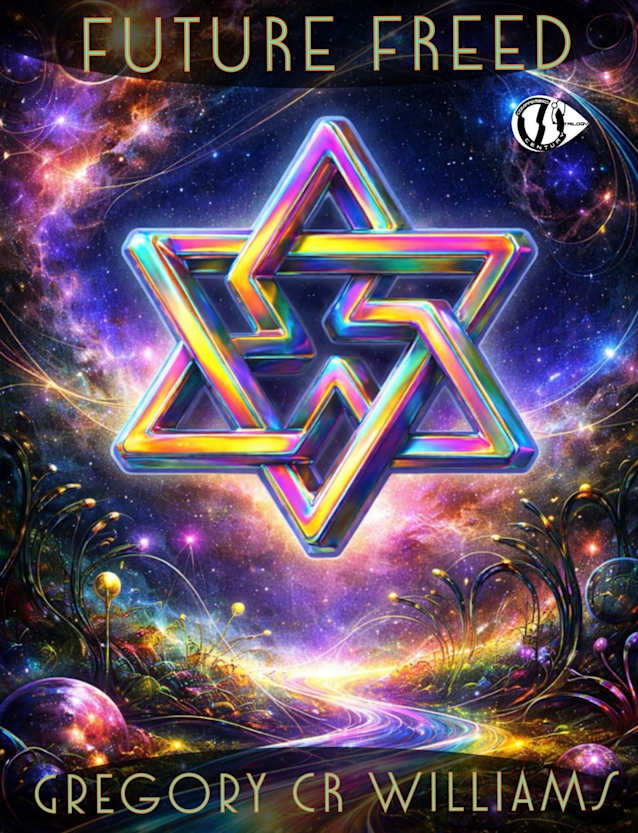
Future Freed : Know ~ Grow ~ Flow (Compressed Century Book 1)
About
Future Freed: Why the Age of the “Impossible Problem” Ends Now
What if the problems we label unsolvable collapse the moment humanity aligns intelligence, values, and systems?
Future Freed examines that question with calm authority and narrative force. It begins from an uncomfortable truth: the same human ingenuity that crossed oceans and cured disease also built inequality, exhausted ecosystems, and normalised short-term thinking. Progress expanded power, and power, left unguided, fractured both society and the living world. This book does not look away from that sequence. It follows it carefully, step by step, and then shows how it can be reversed.
Rather than offering slogans or technological optimism, Future Freed presents a clear, grounded argument: civilisation does not fail through a lack of intelligence. It fails through misalignment. Intelligence races ahead whilst values lag behind, and systems lock those distortions into place. When alignment returns, outcomes change with startling speed.
Through interwoven narrative chapters, real-world examples, and coherent frameworks, the book traces how alignment already emerges across cities, oceans, energy systems, education, economics, and governance. Early chapters follow individuals and communities who learn to listen again—to land, water, time, and one another. Later sections widen the lens, revealing how these local shifts scale into planetary patterns once systems begin to learn rather than dominate.
You will encounter learning cities that treat streets, rivers, and air as teachers. Witness economies that reward renewal rather than extraction. Follow ocean and forest networks that speak through data shaped by respect. Artificial intelligence appears not as a master, nor a threat, but as an interpreter— evolving into Augmented Intelligence that supports human judgement whilst restoring humility toward natural limits.
The book argues with clarity that the future does not require perfection. It requires coherence. Rapid gains appear where pilots align early, whilst broader stabilisation unfolds unevenly across institutions. This is not failure; it is how living systems adapt. Future Freed examines that rhythm and shows why patience paired with direction outperforms urgency without purpose.
Written in a lucid style, the narrative avoids apocalypse and complacency alike. It does not promise rescue through invention alone, nor does it retreat into nostalgia. Instead, it offers something rarer: relief grounded in realism. When fog clears, even difficult paths become walkable.
For readers concerned about climate breakdown, social fragmentation, democratic fatigue, or the uneasy role of technology, this book reframes the moment we inhabit. It shows that humanity already holds the tools required for restoration. What changes everything is how those tools align.
Future Freed speaks to readers who sense that history has reached a hinge—not a dramatic collapse, but a quiet choice. It invites reflection without despair and action without frenzy. Above all, it restores agency by showing that the age of the “impossible problem” ends not through force, but through understanding.
This is not a manifesto for domination. It is a guide for partnership—between people, systems, and the living Earth we share. But mostly it’s a story of hope in the dark days of the twenty first century. A beacon showing glimpses of a future where we are all free to pursue our purpose. In a world free from greed and poverty. Living in a harmonious future with respect of all life we share our planet with.